Is Your Leadership Holding Back Your Nonprofit?
We don’t like to talk about it—but we should. Sometimes, the biggest obstacle to transformation in a nonprofit isn’t lack of funding, staff turnover, or outdated systems. It’s leadership.
We don’t like to talk about it—but we should. Sometimes, the biggest obstacle to transformation in a nonprofit isn’t lack of funding, staff turnover, or outdated systems. It’s leadership.
If you’re a nonprofit leader feeling overwhelmed by digital marketing—or unsure if your website is even helping you anymore—this episode of A Modern Nonprofit Podcast is for you.
When it comes to securing funding, your budget serves as a narrative tool, helping funders understand your mission, your needs, and your impact. But the challenge lies in the fact that not all funders want to see the same story.
Does your nonprofit rely on a patchwork of systems—Google Sheets, Eventbrite, Mailchimp, Canva, Salesforce, and five others—to keep things running?
When it comes to Federal Single Audits, nonprofits often make costly mistakes that lead to compliance issues, financial weaknesses, and material deficiencies.
At The Charity CFO, we’ve worked with hundreds of nonprofits (if not thousands)—and reviewed thousands of financial systems—over the past decade. From grassroots organizations to $20M+ institutions, we’ve seen firsthand what sets high-performing nonprofits apart.
In this episode of A Modern Nonprofit Podcast, Tosha Anderson and branding expert Seth Donlin unpack why personal branding is no longer optional for nonprofit leaders—and how it can drive deeper donor engagement, visibility, and trust.
Think your nonprofit is safe from fraud? Think again. Fraud happens in nonprofits far more often than leaders realize—and it’s not just the obvious scams.
Nonprofits must strengthen financial transparency and controls to maintain trust and secure funding amid increasing scrutiny.
Discover how a nonprofit CFO prioritizes wellness, self-care, and community during the busiest times of the year. Practical tips for staying grounded while leading with impact.
If you’re a particularly small organization, it may even be the CEO who wrangles an accounting spreadsheet every once in a while.
What KPIs should you be tracking in your nonprofit? Check out this post and learn what you need to know.
Accounting software and fundraising software are both integral components of success in a nonprofit. And they each serve a unique purpose.
Your nonprofit organization relies on the knowledge and guidance of its leadership team to advance its mission.
Nonprofits rely on their leadership team to help shape and implement the mission, making succession planning a key part of long-term success.
KPIs for nonprofits provide a clear measure of how well the nonprofit is maintaining financial health while working toward its mission.
No time to read this article now? Download it for later.
The type of accounting your organization uses could be holding you back from getting the most out of your accounting system. While many nonprofits start with cash-basis accounting due to its simplicity, this method often falls short of providing a comprehensive view of a nonprofit’s financial health.
Transitioning to accrual-basis accounting can offer a more accurate representation of finances and enhance long-term planning. Let’s look at the differences between cash-basis and accrual accounting and why you might want to switch.
Before we can know why to switch accounting systems, it’s important to understand how each system works. The main difference between cash-basis and accrual-basis accounting is when revenue and expenses are recorded.
In cash-basis accounting, revenue gets reported only when the cash is physically (or digitally) received. Likewise, expenses are recorded when money leaves the organization’s account. Cash-basis accounting is most common for smaller nonprofits, where financials tend to be less complicated.
Accrual-basis accounting, on the other hand, records revenue and expenses when they are incurred. The accrual-basis method records transactions with the assumption that the money will physically change hands in the future.
For example, a nonprofit provides a paid service to a community member and issues an invoice. The revenue from the service is recorded now, even though the invoice hasn’t yet been paid.
Cash-basis accounting is a simple method that’s great for new or small nonprofits. However, there are two major limitations to using the cash-basis method:
The timing of an organization’s income and expenses in cash-basis accounting can misrepresent the actual financial state of the nonprofit. Additionally, the cash-basis method can make accurate forecasting and budgeting difficult.
Say a nonprofit hosts a large fundraising event in the second quarter. The costs for the event are all paid in the first quarter, but donation funds and other revenue won’t come through until the second quarter.
By using the cash-basis method, this organization would look like it’s struggling financially in the first quarter but has a major surplus in the second. The reality is somewhere in the middle, but the organization may be tempted to under budget for the first quarter and over budget for the second.
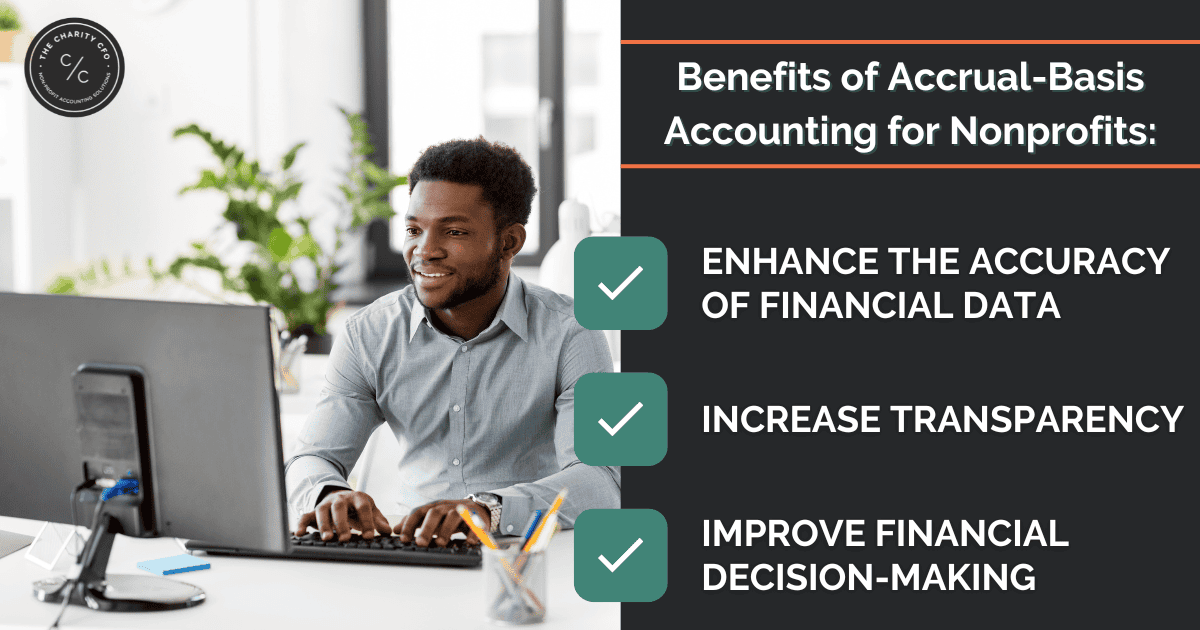
Switching to accrual-based accounting can have a lot of benefits for nonprofit organizations. Most importantly, making the switch can help your organization:
By recording revenue and expenses when they happen, instead of when cash is exchanged, helps provide a more accurate picture of the organization’s financial health at any given time. You’ll get a better view of long-term financial transactions, rather than just seeing what cash is currently in an account.
Accrual accounting also helps keep related revenues and expenses together. Matching revenues with the expenses incurred to generate them reflects the true cost of running programs and services.
Accrual accounting provides stakeholders with a detailed view of your organization’s financial activities, improving trust and confidence. Transparent financial reporting can also improve donor relations. With increased transparency through accrual accounting, donors can see how their contributions are being used and the impact they’re making.
Better transparency also helps you stay compliant with regulations or grant requirements. Many regulatory bodies and grantors require accrual-basis financial statements. Adopting the accrual method ensures compliance with Generally Accepted Accounting Principles (GAAP) and other relevant standards. By making the switch, you could open your organization up to more grants and funding opportunities.
A more accurate understanding of your organization’s financial health means nonprofit leaders can make better strategic, data-driven decisions. Accrual accounting provides the data needed to forecast cash flow, budget more effectively, and allocate resources where needed most.
An accrual-based accounting system also gives you insights into the efficiency and effectiveness of programs and services. Detailed financial reports generated using the accrual method can highlight inefficiencies and areas for improvement within your organization. By analyzing the financial performance of programs, you can determine which initiatives are delivering the most value–and which may need adjustments or more support.
The cash-basis accounting method is simple, but simplicity could be holding your organization back. Moving from cash-basis to accrual-basis accounting can help your nonprofit better manage its financial health and improve transparency.
While switching to accrual-basis accounting can be daunting, the easiest way to make the switch is to work with a trusted nonprofit accounting firm, such as The Charity CFO.
Our dedicated team of accounting professionals specializes in nonprofit accounting–ensuring your organization gets advice from accountants who understand the unique needs of nonprofits. Get in touch today to see how we can help you transition accounting systems!
No time to read this article now? Download it for later.
No time to read this article now? Download it for later.
The middle of the year is the perfect time to pause and reflect on your nonprofit organization’s financial health. A midyear financial review helps you identify problems early and align your nonprofit’s financial performance with planned goals.
Conducting a review is important, but where do you start? Use this guide to help you better understand how–and why–to conduct a midyear financial review for your organization.
Most organizations know the importance of end-of-year reviews, but did you know a midyear review can have similar benefits? Doing a midyear nonprofit financial review provides three main benefits to your organization:
Each of these benefits helps ensure your organization stays on track to reach its financial goals by the end of the year.
Your midyear review will likely look very similar to a year-end financial review. This means your review should include all aspects of your organization’s finances–from budgets to grant status.
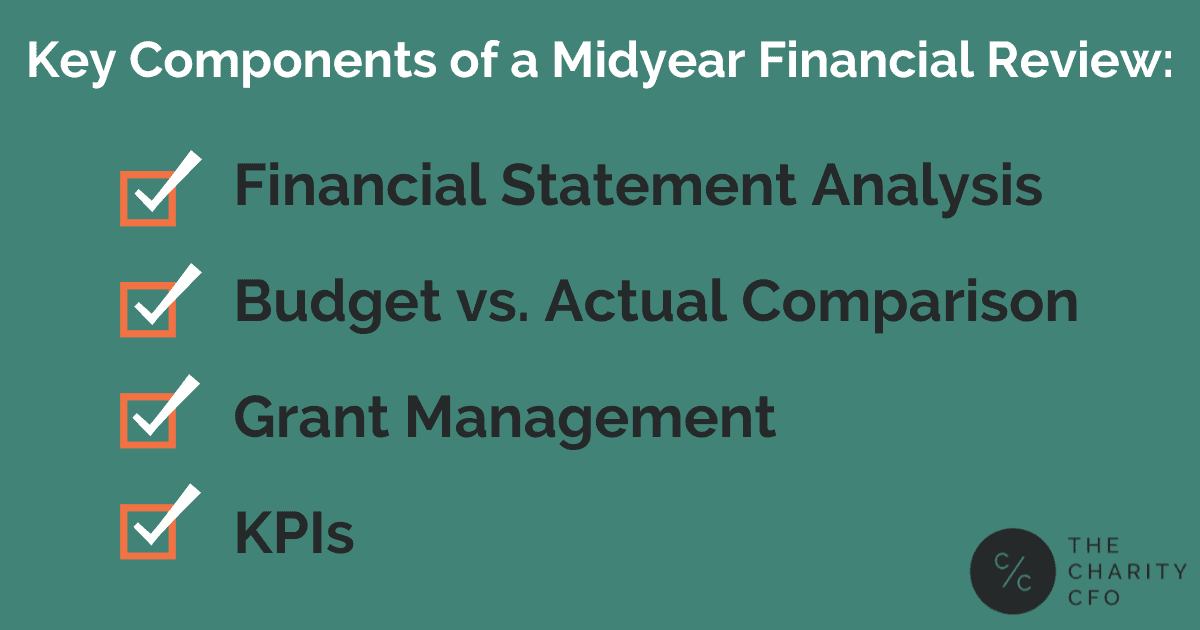
There are generally four categories you should include in your review:
Before jumping into the actual review process, you’ll want to prepare yourself for the review. This means gathering all of your organization’s relevant financial documents and reports. For example, you may need to collect the year’s cash-flow projections, budget to actual comparison, and ongoing grant information.
Additionally, you should involve key stakeholders in the review process, such as the board of directors, your financial or accounting teams, and program managers. Bringing stakeholders on board not only increases accountability and transparency but can also open new insights into financial processes during the review.
Once your review is done, it’s important to carefully record your findings and present them to the board of directors. Based on your insights and findings, you can also make recommendations to the board.
The process of conducting a review may vary slightly between organizations, but the general steps include:
You might encounter challenges when conducting your review, so it’s important to know how to overcome them. Luckily, many nonprofits have similar challenges when analyzing their finances, including:
Most nonprofit financial recording challenges, such as data accuracy and meeting legal and grant compliance requirements, can be solved using technology. Introducing technology, such as accounting software, can help your organization stay organized and maintain accurate financial records.
Other challenges, such as resource constraints, may require reallocating or changing resources to fit your needs. For example, if you don’t have time to conduct a review, you could hire an external accounting firm to perform an audit or reduced scope of work.
The findings of your review give you a better picture of the financial health of your organization. However, they offer so much more than that alone.
You can use your findings to analyze your current systems and processes to create more effective fundraising, accounting, and resource management. Your review can help you readjust budgets before the end of the year, which could help reduce financial strain or cash flow issues.
Likewise, your review findings can help with strategic planning for the remaining year and the year ahead. You can use your findings to make data-driven recommendations to the board and other stakeholders that can directly improve the financial health of your organization.
Reviewing the financial health of your organization helps you stay on track to meet financial goals. It can also be a good way to identify any financial struggles your organization might face. When caught in a midyear review you can address these financial concerns early.
If you’re overwhelmed by the idea of conducting a review, you’re not alone! An easy solution is to work with a nonprofit accounting and financial firm, such as the Charity CFO, to help you organize and complete your review.
The team at the Charity CFO can help you create and implement a plan of attack for your review. We specialize in nonprofit accounting, so you can be sure we understand the complexities of nonprofit financial documents.
Schedule a free call today to learn more about completing a financial review!
No time to read this article now? Download it for later.
No time to read this article now? Download it for later.
Choosing the right accounting services is crucial for the financial health of your nonprofit. The right nonprofit accountant helps your organization properly manage its finances, which improves trust and transparency with stakeholders and donors.
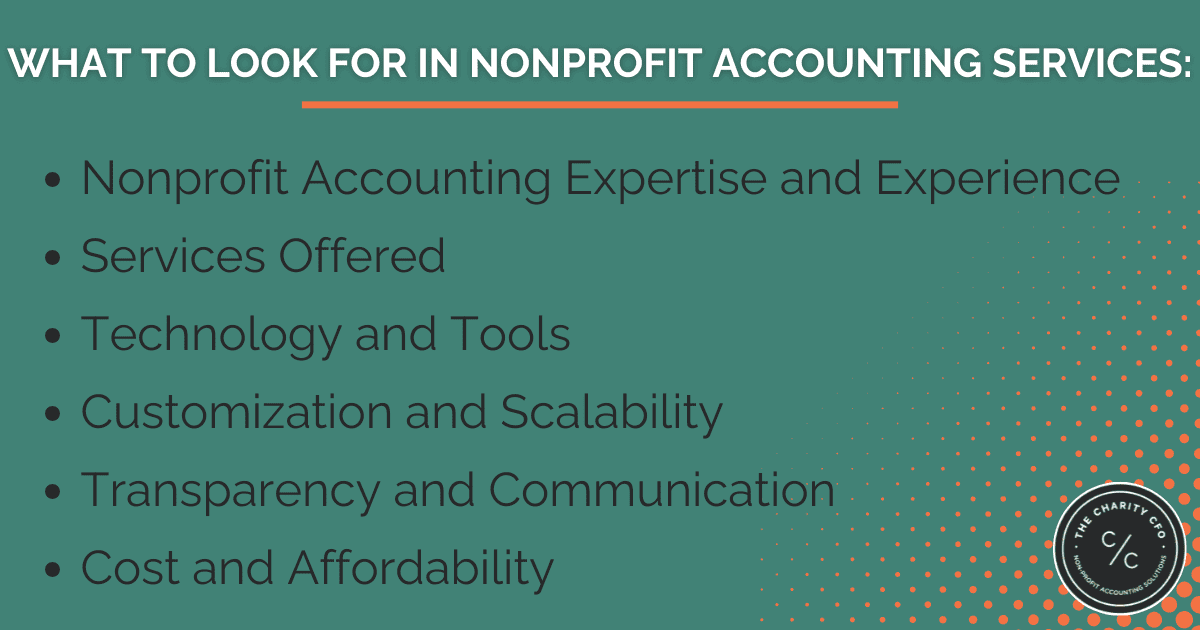
Let’s explore the key factors to consider when researching nonprofit accounting services–from the firm’s expertise to its technology recommendations–so you can be sure you’re getting the nonprofit accounting your organization needs.
Nonprofit accounting isn’t the same as for-profit business accounting. Your organization needs a nonprofit accountant who understands the differences and has experience in nonprofit accounting. Look for accounting firms that specialize in nonprofit accounting when researching accounting services.
Specialized nonprofit accountants know the ins and outs of nonprofit accounting, so they can easily jump into managing your organization’s finances. Unlike a generalized accountant, nonprofit accountants already understand the unique challenges and regulations nonprofit organizations face. This can be especially important when it comes to reporting and filing requirements.
When selecting nonprofit accounting services, looking for a firm that offers a comprehensive suite of services tailored to your needs is important. There’s a wide range of accounting services your organization might need, including:
These key services are vital to maintaining the financial health of your organization. Proper tax preparation, for example, can help your nonprofit stay compliant with financial regulations and maintain tax-exempt status. Likewise, an accountant who offers financial reporting services can help you choose and prepare the right financial reports for your board of directors, donors, or the general public.
Additionally, most nonprofit accounting services include specialized services for nonprofits, such as:
Specialized accounting services like grant management help your organization efficiently manage funds to help meet donor expectations and plan for growth and sustainability.
The modern world is built on technology, and nonprofits are no different. Technology is one of the most important tools in modern nonprofit accounting. When researching nonprofit accounting services, aim to work with a firm that embraces and encourages technology like accounting software or donor management systems.
A good nonprofit accounting firm will work with you to find the right technology tools to help you simplify your bookkeeping. For example, they might recommend tools that make it easier for employees to track expenses using a mobile app. This eliminates the need to collect paper receipts from employees and streamlines your accounting systems.
You should also choose nonprofit accounting services that prioritize nonprofit data privacy. Data breaches can plummet public trust in your organization, so it’s important to use secure technology and software.
You may not need the full range of your accountant’s nonprofit accounting services right now. But what happens as your organization grows? You’ll likely need expanded accounting services.
Your nonprofit accounting services should be customized to fit your current needs. However, you also want to work with an accountant who can scale your services to fit your future needs. Consider the future of your organization as you look for nonprofit accounting services.
Accountants often work with sensitive financial data. It’s no surprise that should look for nonprofit accounting services from a trustworthy firm.
However, you also want to take the firm’s transparency and communication skills into consideration. Does the firm respond quickly to messages? Are they open and honest about the state of your organization’s financials? These factors can help you narrow down the right accounting services for your nonprofit.
The final thing to look for in nonprofit accounting services is the price. Unfortunately, financial sustainability is one of the biggest challenges facing many nonprofits. You need to be sure you can afford the nonprofit accounting services your organization needs.
On the other hand, it usually doesn’t make sense to choose nonprofit accounting services based solely on cost. The key is to find accounting services that balance the cost with the quality of services provided.
Luckily, many nonprofit accounting services can be tailored to fit your needs–including your budget. As you look for accounting services, be sure to let potential accountants know your budget so they can build an accounting plan that meets your financial constraints.
Your nonprofit accountant is an important decision for your organization. Focus on these six factors when researching accounting services to ensure you find the right fit for your organization. The right accounting services will help your organization streamline financial processes, build trust with donors and stakeholders, and ultimately contribute to expanding your mission.
At The Charity CFO, we understand the unique financial and accounting needs of nonprofits. Our team specializes in nonprofit accounting and we take pride in being able to accurately and efficiently help nonprofits streamline their accounting processes. We’re here to help you better understand the financial health of your organization–and discover ways to improve.
Get in touch today for a free consultation on our nonprofit accounting services!
No time to read this article now? Download it for later.
No time to read this article now? Download it for later.
Leading a nonprofit organization isn’t just about passion–it’s about effective leadership. Nonprofit executive directors play an irreplaceable role in steering their organizations toward success.
This guide will explore key strategies and insights to help you excel as a nonprofit executive director. Whether you’re a seasoned pro or new to the position, this roadmap will help empower you to make a meaningful impact in your community.
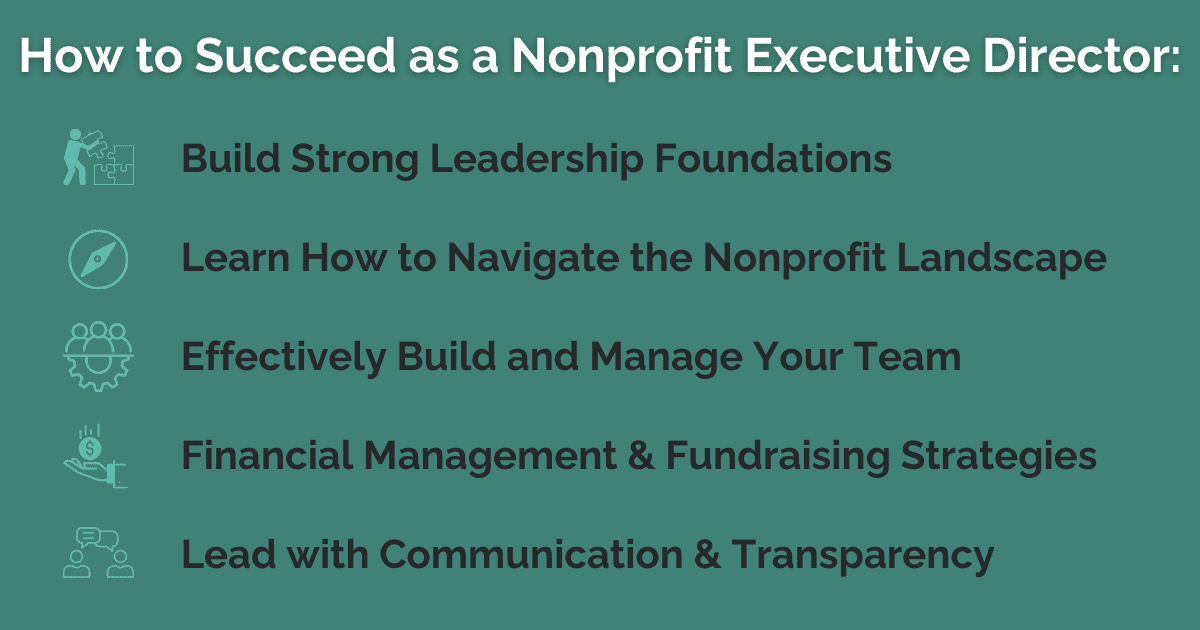
You can’t effectively lead an organization–or a team–if you don’t have clear goals, missions, or plans for it. The first step to becoming a great executive director is to build strong leadership foundations that help define your organization.
This process should include:
Defining and clarifying the goals and mission of your organization sets you up as a successful leader. In turn, you’ll earn the respect of employees, community members, donors, and organizational stakeholders.
In many cases, the Board of Directors sets the vision, mission, and values of the organization. Additionally, the Board, in conjunction with leadership, develops a strategic plan. As a new leader, it’s important to understand where the Board is with this and how you help move their agenda forward.
The nonprofit industry has a lot of unique challenges, but it also offers truly powerful rewards. Great executive directors know they need to learn the ins and outs of the nonprofit sector. This includes both the industry as a whole as well as your organization’s local or community landscape.
A great way to learn your organization’s landscape is to identify stakeholders in your immediate network and across the industry. Then, you can work to build relationships with these leaders to help you advocate for your organization’s mission and causes.
Additionally, you should stay up-to-date on industry trends and best practices. Subscribing to nonprofit industry journals, podcasts, and news outlets helps you stay on top of the latest nonprofit sector news and insights.
Effective team building and management make it easier for you to help your organization reach its goals and advance its mission. Building a strong team starts with hiring individuals who align with the organization’s mission and values.
You’ll likely have to prioritize the most important roles to hire for immediate success. For example, do you need to hire a CFO or more frontline workers to help perform programs and services?
But building your team is only the first half of a great organization. You also need to work on creating and encouraging a positive workplace culture. Too often, nonprofit workers feel overworked and underappreciated. As an executive director, you have much power to help foster a healthy workplace from the top to prevent burnout and keep employees happy.
As an executive director, one of your most important roles in your organization is providing financial management. Even if you have an extensive fundraising team, you’ll likely still be working hands-on in managing funds, creating fundraising strategies, and allocating resources effectively.
Essentially, you can consider yourself the financial steward of your nonprofit. Your work will likely include:
Communication and transparency are essential for the success of your organization. Keeping communication channels open fosters trust and accountability within the organization and among stakeholders from the board or directors to community leaders.
Likewise, sharing stories about the organization’s impact helps engage donors, excite volunteers, and inspire the community. Active, excited community members lead to continued support for your nonprofit and its mission.
Additionally, leading with transparency helps you manage public relations to create a positive image of the organization. Handling any crises quickly and transparently helps you maintain trust and credibility with the community.

Succeeding as a nonprofit executive director requires strong leadership, strategic thinking, effective communications, and a deep commitment to your organization’s mission.
While the journey may be challenging at times, the impact you make on your organization and community is immeasurable. If you embrace the opportunity to lead with purpose and let your passion drive you forward, you’ll be sure to succeed as an executive director.
Need a little help with the financial aspects of running your nonprofit? The team at The Charity CFO is here to help! We provide comprehensive bookkeeping and accounting services for nonprofits.
Contact us today to learn more about our nonprofit accounting services.
No time to read this article now? Download it for later.
No time to read this article now? Download it for later.
Efficient bookkeeping is essential to the success and sustainability of any nonprofit. As a nonprofit leader, it can be difficult to give your bookkeeping the time it needs to stay accurate.
Luckily, modern accounting software and other bookkeeping technologies can help you keep up with day-to-day bookkeeping, reporting, and accounting tasks more efficiently.
Let’s take a closer look at the importance of efficient bookkeeping for nonprofits, common challenges, and how you can use technology to improve the accuracy and efficiency of your accounting system.
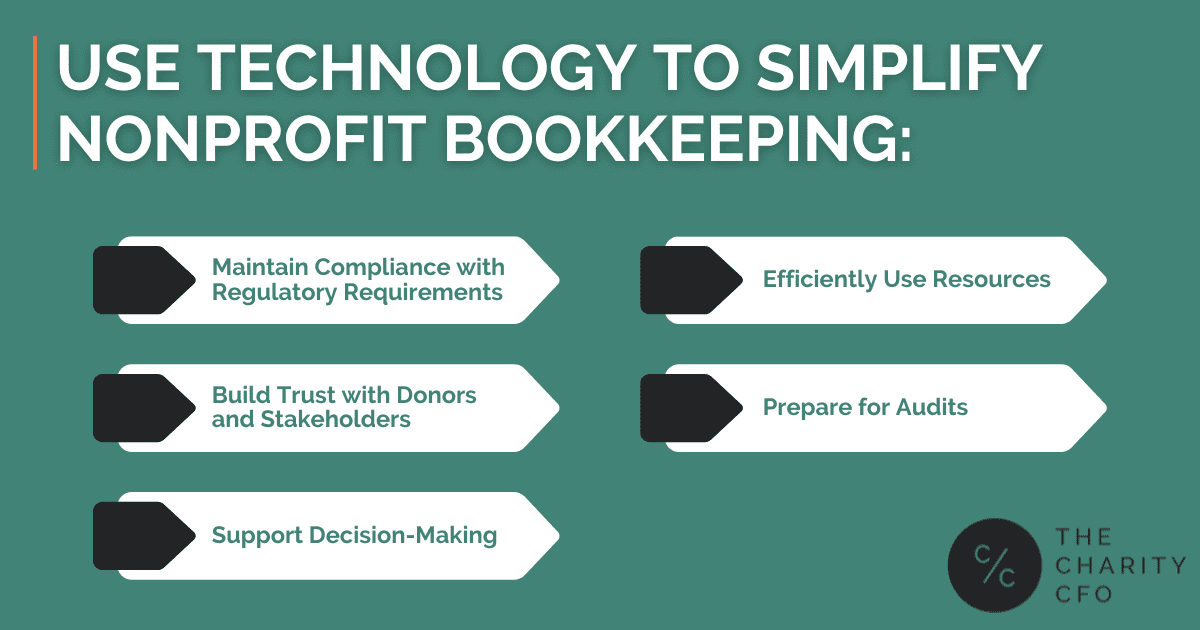
Just like for-profit businesses, nonprofit organizations need to have an efficient and accurate accounting system. Messy, broken accounting systems can lead to inaccurate financial reporting which can then cascade into further issues like noncompliance with regulations or loss of donor trust.
On the other hand, efficient and accurate nonprofit bookkeeping can help your organization:
Efficient bookkeeping isn’t just about keeping records–it’s about building a solid foundation for your organization’s financial integrity and operational success.
Nonprofits face unique challenges to keep their organizations running, including nonprofit accounting challenges.
Although nonprofit accounting challenges may seem overwhelming, having the right bookkeeping and accounting processes in place can help your organization overcome challenges including:
Technology is one of the most effective ways to improve the accuracy and efficiency of your nonprofit bookkeeping system. The rise in modern nonprofit accounting software and tech tools is making it easier than ever for nonprofit leaders to manage their finances.
Adding technology tools to your bookkeeping processes can have a range of benefits for your organization, including:
Technology can help you simplify your nonprofit bookkeeping and help you maintain more accurate records. However, it’s important to consider your nonprofit accounting tech stack to help maximize the benefits of technology for your organization.
To get the most from your technology implementation, consider these factors in your nonprofit accounting system:
Diving into the world of nonprofit accounting software can feel like information overload. There are almost endless tools and configurations you could use to run your accounting system, so how do you choose?
Simple: work with a trusted nonprofit accounting partner to create your customized nonprofit bookkeeping system.
The Charity CFO is an accounting firm specializing in nonprofit accounting. That means we know the unique challenges and needs of nonprofits like yours. Our team can help you sort through technology options to find software and services that work best for your organization.
Learn more by scheduling a call with us today!
No time to read this article now? Download it for later.
The role of a CFO is all about financial management. Depending on the organization, a CFO may have many different responsibilities.