
Nonprofit Communications: Navigating Donor Conversations
Nonprofit communications can be complicated, and sometimes awkward.
It’s an avoidable fact of charity life that organizations are often in need of money – and donors are the primary source. But while it’s relatively easy to raise funds in dire situations or emergencies, getting donors to invest can be trickier when your charity seems financially stable.
The secret comes down to how well nonprofit leaders understand what donors are thinking and feeling and how charities communicate with them. Let’s take a closer look at the best ways to navigate this common but tricky situation.
The Donor Perception Challenge
All too often, donors (even large and involved ones) have relatively little idea about how a nonprofit’s operations and finances truly work. While some organizations have significant endowments and reserves, many are operating without much sustained and reliable revenue.
Under these circumstances, it can be difficult to make large investments in growth or plan for the future.
Furthermore, when donors believe things are fine and money is abundant, it can result in lower giving. This can lead to further cuts, lower programming impact, and a downward spiral that’s hard to exit.
Fortunately, this can all be avoided by being straightforward and transparent with those responsible for keeping the lights on with their donations.
Operating Reserve Policy: Demystifying Financial Stability
The key to stable operations for any organization is an operating reserve. Think about an operating reserve as a sort of savings account and safety net for the nonprofit. It’s a general fund with no specific uses or restrictions, available to cover unexpected expenses of all types.
This could include everything from a dip in donations caused by a recession to a surprise major expense like equipment upgrades or even unexpected opportunities to expand programming.
The exact amount of reserves will vary from organization to organization, but most try to sock away three to six months’ worth of expenses, which gives ample time to right the ship if donations start falling.
It might appear to be a lot of money just sitting around unused, but these reserves can sometimes be the difference between the survival or failure of a nonprofit or charity.
Spend Down Policy: A Deeper Dive
As critical as creating reserves is clearly defining the circumstances that will lead a nonprofit to use them. With a clear policy on when it can be spent down, there’s no need for the sometimes extended, emotional debates that can result from dipping into reserve funds.
With a transparent spend-down policy, mission-driven organizations can quickly take action to cover financial shortfalls, allowing them to continue their work without the disruptions that funding slowdowns can cause.
Each charity will need to determine its own circumstances, but all should seek to balance immediate impact with long-term sustainability.
Nonprofit Communications Strategies for Navigating Donor Conversations
So what’s the best way to approach this with donors on a practical level? Remember these key principles to make donor discussions simple and low-stress.
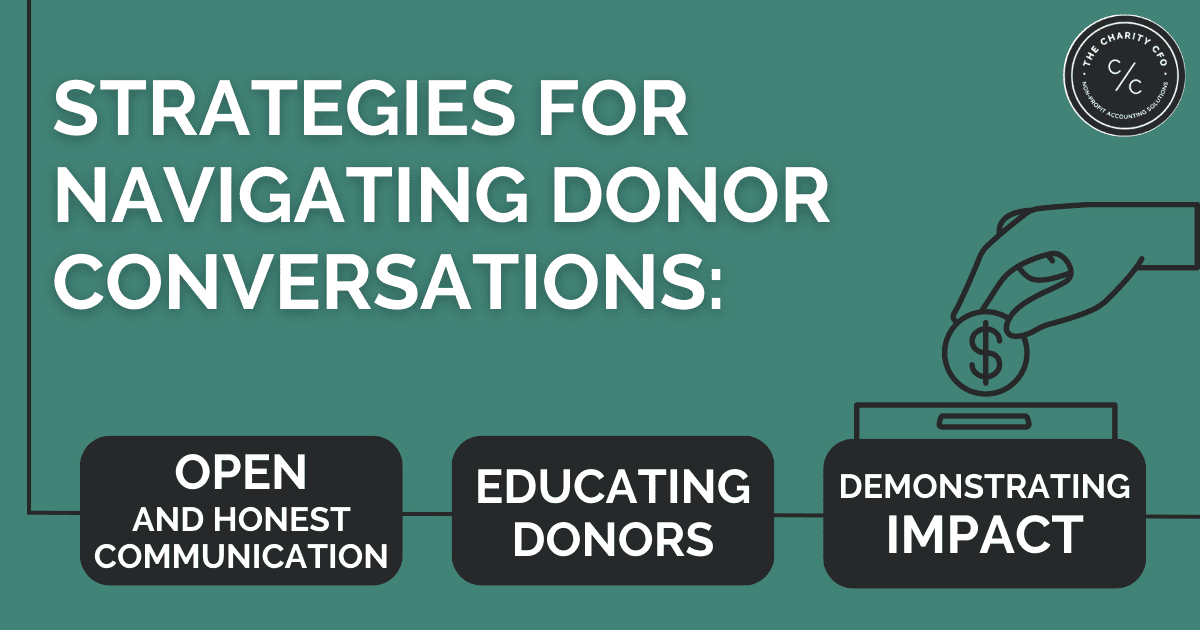
Open and Honest Nonprofit Communications
While it can feel strange to reveal your organization’s financial details to outsiders, it’s imperative that donors have a complete and detailed picture of the nonprofit’s economic realities. That way, they can understand the budget and give the appropriate amount to keep things running successfully.
At the same time, paint a picture of the organization’s financial goals and needs in the future.
Educating Donors
It’s also vital to educate donors and other sources of financial support about the reason behind the large sums of money sitting in operating reserves. Break down the organization’s policy for building and maintaining reserves, as well as the rationale behind how and when leaders will use them. With these concepts in mind, it’s a lot easier to see the true financial picture for a nonprofit.
Demonstrating Impact
One of the best ways to grow donors’ confidence in you and ensure reliable future funding is to make them understand everything they’re getting for their money.
Showcase the organization’s ongoing programs and initiatives, taking particular care to highlight the success stories. Then, connect the dots and show how continued support is vital to keep making a difference.
Crafting a Compelling Fundraising Message
Fundraising doesn’t just happen on its own; organizations must carefully craft a compelling message and strategy to show donors why they’re the best recipient of scarce donation dollars.
- Ensure the message is tailored to address donor concerns while also emphasizing the organization’s commitment to managing its finances responsibly.
- Consider how any fundraising message is aligned with the organization’s mission and values.
- Create engaging content that educates donors, which can be distributed using both traditional outreach and digital platforms, like social media.
These can encourage an open, direct dialogue between the organization and its supporters.
Don’t Stop Requesting Money
Reaching out to donors for money can feel awkward, but it’s the most crucial part of delivering on a nonprofit’s mission. Still, it’s critical to do it in the right way so all sides can feel great about where the funds are going. Focus on:
- Transparency
- Education
- Open communication
This is especially true when it comes to operating reserves and how and when they’re spent down.
Reach out to The Charity CFO today for help navigating these complex issues and putting together your Operating Reserve Policy and Spend Down Policy.