5 Signs Your Finance Committee is Not Effective
The effectiveness of a nonprofit’s finance committee can be a major factor in an organization’s success. An effective, engaged committee helps the organization proactively and effectively manage its finances to advance its mission. An ineffective committee, however, can hold your organization back and could even lead to poor financial health.
Are you worried your finance committee isn’t as effective as it should be? Look for these five warning signs that your committee isn’t effective.
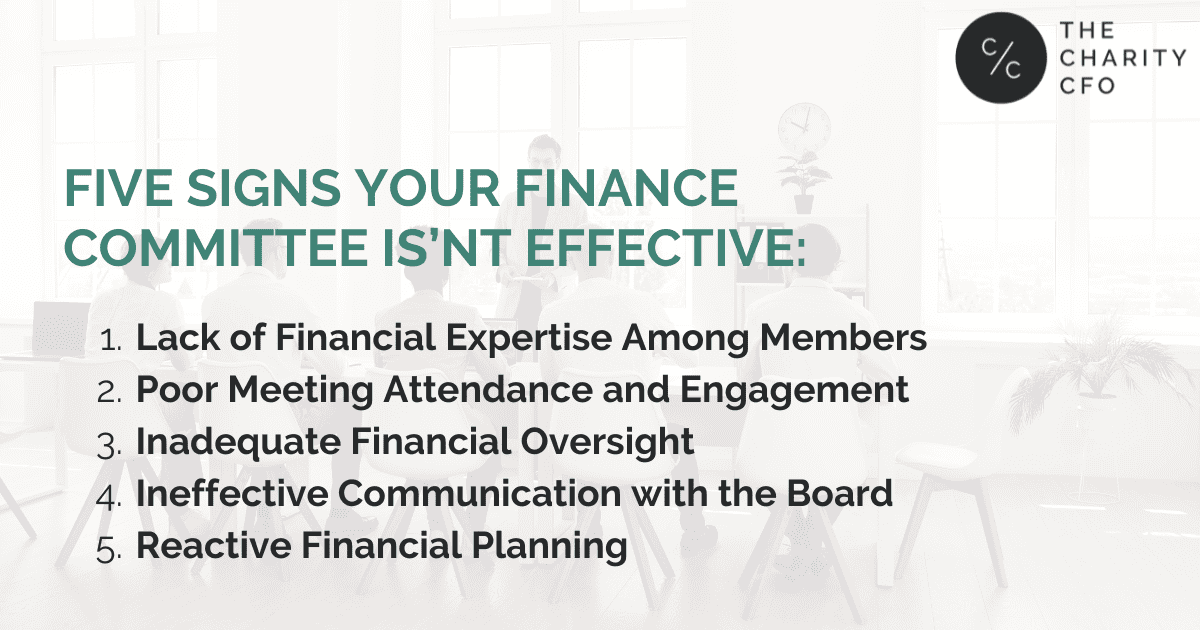
Lack of Financial Expertise Among Members
The finance committee’s main goal is to provide financial oversight for your organization. This means each member of the committee should have enough financial knowledge to make informed decisions.
Many ineffective finance committees have only one or two members with this important financial knowledge, meaning they must rely on a single expert. While your finance committee doesn’t need to be made up of finance professionals, each member should be able to understand the complexities of your organization’s finances. If they don’t, you could face frequent misunderstandings between the committee and your accounting team. Your committee might also lack the ability to accurately interpret financial data or reports, making the committee less effective overall.
The good news is it’s relatively easy to combat a lack of knowledge. Consider providing financial committee members with financial training to improve their financial literacy. When it’s time to bring on new members, look for members who have experience and expertise in finance, even if they’re not direct financial professionals.
Poor Meeting Attendance and Engagement
Getting things done in a meeting where attendees are disengaged and uninterested is almost impossible. It’s even more difficult if members are skipping meetings or leaving early. Low engagement and attendance rates can also pull down the overall morale of other committee members.
Even if members make it to meetings, they might come unprepared. An unprepared committee makes it more difficult to make decisions and stretches out the time it takes to complete tasks.
A committee full of engaged members, however, is ready to tackle difficult questions and make smart decisions for the nonprofit. Much like an engaged board of directors, an engaged finance committee can become your organization’s greatest ambassadors and advocates.
Three ways to improve your finance committee’s attendance and engagement include:
- Set clear attendance expectations and requirements for committee members so they understand the required time commitment.
- Improve the meeting structure for a better flow from topic to topic and provide detailed agendas to members before meetings.
- Foster a culture of accountability by delegating small tasks to each member, further improving their engagement and ownership in the committee.
Inadequate Financial Oversight
The finance committee plays an important role in the financial success of your organization by monitoring the budget and reviewing financial statements. However, one of the key roles of the committee is to provide financial oversight and ensure the organization follows set financial processes and policies. Without proper oversight, the organization risks financial instability, mismanagement, and even potential legal or compliance issues.
An ineffective finance committee doesn’t provide the financial oversight your organization needs. Signs of inadequate oversight include:
- The committee misses discrepancies in financial statements.
- Committee members skip or delay regular financial reviews which leads to outdated information.
- The committee overlooks missing internal controls.
To solve these issues, the finance committee members may need to create their own processes and controls. For example, the committee can set up a financial review calendar that includes monthly budget reviews, quarterly financial statement analysis, and annual financial overviews.
Ineffective Communication with the Board
The board of directors and finance committee must work together to create a successful nonprofit organization through clear and timely communication. A finance committee that isn’t effective might delay reporting to the board or not provide enough information for the board to accurately assess the organization’s finances.
Poor communication with the board of directors can leave board members uninformed about the financial health of the organization. This could lead to miscommunications and poor decision-making from the board of directors.
Organizations can improve communication between the board of directors and the finance committee by fostering an open dialogue and establishing regular reporting schedules. You can also encourage your finance members to use clear and concise communications to help reduce the risk of miscommunication between members.
Reactive Financial Planning
One of the biggest signs of an ineffective finance committee is reactive financial planning. A committee that reacts to financial challenges–rather than proactively anticipating them–is likely unengaged and inefficient. This might include a lack of budget forecasts or the absence of a financial strategy.
Your organization needs a finance committee that will proactively address issues and pave the way for financial success. Providing targeted financial training and professional development opportunities to committee members can help them move from reactive to proactive.
Evaluating Your Finance Committee
Disengaged committee members, lack of financial understanding, and poor internal financial controls can all lead to an ineffective finance committee. As a nonprofit leader, you can help improve the effectiveness of your committee by evaluating it and implementing solutions as needed. Taking the time to review your finance committee can help your organization improve its financial health.
Need help with nonprofit finances? The Charity CFO specializes in providing expert financial advice to nonprofits. Our team understands the complex financial needs and challenges of nonprofits. We can help you better understand your organization’s financial health.
Contact us today to learn more about our nonprofit financial services!