
• NEWSLETTER
    • Schedule a Call
    The Charity CFO
    • Services
      • Bookkeeping
      • Accounting
      • Grant Management
      • Budgeting & Forecasting
      • Audit Assistance
      • System Migration & Tech Integration
      • Tax Preparation
    • Who We Serve
      • Human & Social Services
      • Education & Workforce Development
      • Youth & Community Development
      • Health & Human Services
      • Legal, Advocacy & Civil Rights
      • Religious & Faith-Based
      • Arts, Cultural & Environmental
      • Fundraising & Philanthropy
      • Animal Rights and Welfare
    • About
      • Our Team
      • Our Process
    • Resources
      • Blog
      • Podcast
      • Testimonials
      • Newsletter
    • Careers
    • Menu Menu
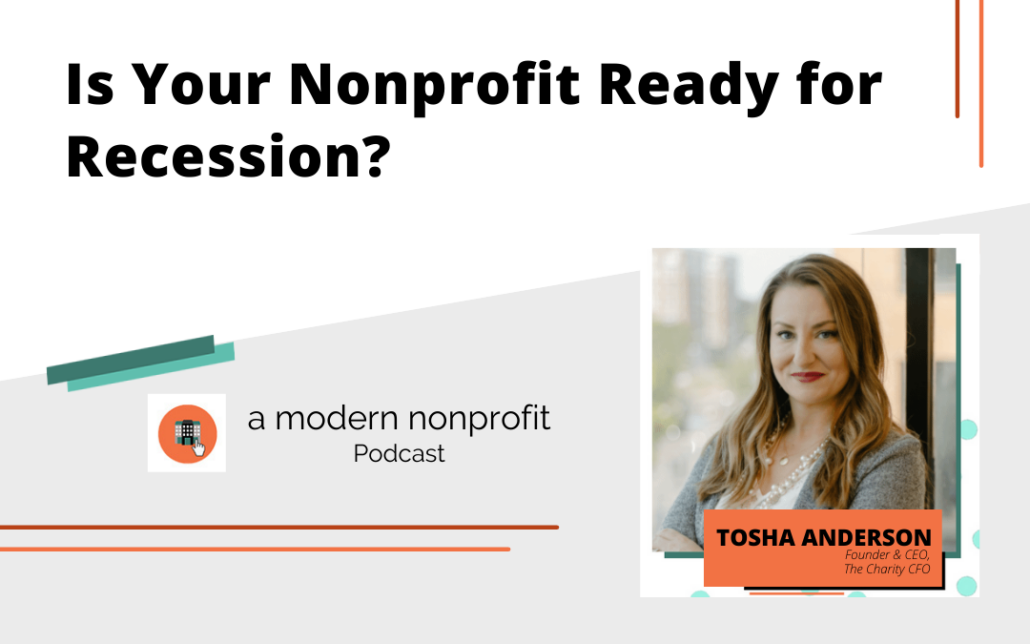
    Is your nonprofit ready for recession?

    6 Steps To Recession-Proof Your Nonprofit

    July 14, 2022/in Accounting, Investment, Reporting, Taxes/by Paul Cook

    A lot of nonprofit leaders are asking us about how to prepare their organizations for the possibility of a recession.

    So I decided to change up the format of my A Modern Nonprofit Podcast this week to talk directly to you about the steps you can take to prepare your organization for a potential recession:


    Click here to listen to the podcast on Apple Podcasts or Spotify

    6 Steps to Recession-Proof Your Nonprofit

    1. Assess Your Cash Flow

    First, you must understand if your organization bringing in more money than it is spending to see if your business is sustainable in the face of recession.

    If you’re currently spending more than you’re bringing in, you’ll slowly start whittling down your savings accounts. And then you’re living on borrowed credit through operating loans, lines of credit, credit cards, and things of that nature.

    If that is your case, I strongly encourage you to staff and figure out how you can flip things around to be consistently bringing in more than you spend over a long-term period, possible over the course of a year.

    Having a grasp on your cash flow is ALWAYS important, but even more so in the face of economic and fundraising uncertainty brought on by a global or national recession.

    2. Keep Your Debt to a Minimum

    This is another everyday principle that becomes doubly important when the state of the economy is uncertain. You don’t want to head into a recession with a business that’s overly reliant on debt.

    And it’s not just a matter of the health of your balance sheet, it’s about understanding, “What is this debt costing me?”

    As in, how much of your much-needed cash are you tying up in debt payments every month? Every quarter? Every year?

    Take a hard look at which debt you can pay off or restructure now to reduce your monthly payments. Ensure that you’ve got the cash to meet your obligations every month even if your cash inflows take a downturn due to macroeconomic factors beyond your control.

    3. Increase Liquidity

    Increasing liquidity means increasing your ability to tap into cash when you need it in the short term.

    In times of recession and uncertainty, it’s important that you have as much of your cash available as possible, as opposed to being tied up in long-term investments or blocked by donor restrictions.

    You should have at least 30 to 90 days of cash on hand, and don’t be afraid to lean toward the 90-day end of the spectrum if the recession intensifies or you experience a decrease in donations.

    If you don’t have 30 days of cash on hand, design a savings plan to get your cash balance to at least 30 days. And I’m not talking about 30 days on your very best day, right before that payroll…

    You should have 30 days’ worth of cash on hand on your worst day after the last payroll hits and before your funding comes in.

    4. Revisit Your Investment Strategy

    I’m NOT an investment advisor, but anytime there is a change in the economic environment, you should check with your investment advisor to be sure your strategy is still appropriate.

    The risk of certain investments will intensify during a recession, so just be sure to make that phone call and get the professional advice you need.

    5. Lock in Your Funding Early

    When there is a recession on the doorstep, it makes sense to lock in your fundraising plan earlier rather than later.

    So start talking to your longstanding donors right away, let them know your plans, and make the ask now rather than at the end of the year. Many of them will be glad to give now and be thrilled that you’re making a proactive plan to weather the storm.

    If these folks are supporters of your work, they’ll be happy to do their part in ensuring your mission survives an economic downturn.

    6. Create a Detailed Fundraising Plan

    I can’t tell you how many times we’ve worked with nonprofits that say, “Well, we raised a quarter of a million dollars last year. So we’ll plan a 10% increase for this year and budget based on that.”

    But if you don’t have a plan for matching last year’s donations AND getting growth, then you don’t really have a plan. You have a dream. And recessions are dream killers.

    So I encourage you to start looking at who gave you money last year and where you think your money will come from this year. And then strategize how you are going to come up with those dollars.

    Set goals and track your progress month-by-month. That way, if you’re $10,000 behind on your annual fundraising goal in June, you’ll know. And you can identify why you’re behind. Is it because you missed out on a grant you got last year? A major donor missed a payment? Or a shift in your special event schedule?

    All of this boils down to knowing your numbers. Because no business–including nonprofit businesses– can operate successfully without knowing their numbers. 

    Is Your Nonprofit Recession-Ready?

    By now, you should have a pretty good idea of whether you’re already prepared for a recession or if you’ve got work to do.

    But there’s no need to panic, in any case.

    Let’s be clear–as of this writing, economists agree that the US economy is not in recession today. But the warning signs are serious, and it’s better to start preparing now for a possible recession in 2023 and beyond.

    So now is the time to start making measured steps to ensure your nonprofit can continue to serve your community in the case that an economic recession does arrive in the near future.

    At The Charity CFO, we provide CFO-level financial guidance for nonprofit organizations, in addition to done-for-you bookkeeping and accounting services. So If you’re not confident in your numbers, or need some help optimizing your bookkeeping and accounting, check out our website to learn more: www.thecharitycfo.com.

    Watch or listen to this episode on A Modern Nonprofit Podcast:

     

    Share this entry
    • Share on Facebook
    • Share on X
    • Share on WhatsApp
    • Share on Pinterest
    • Share on LinkedIn
    • Share on Tumblr
    • Share on Vk
    • Share on Reddit
    • Share by Mail
    Popular
    • What is Financial Oversight?
      Nonprofit Accounting Tips, Tools, & Tricks Your Organization...January 22, 2020 - 4:23 pm
    • nonprofit fundraising strategies
      Do Nonprofits Pay Taxes? This is What You Should KnowJanuary 22, 2020 - 4:31 pm
    • The Charity: 6 Common Tax Mistakes that Non-Profits Mak...January 22, 2020 - 4:55 pm
    • We’re Hiring!January 29, 2020 - 9:31 pm

    Categories

    • 501c3
    • Accounting
    • Accounting, Budgeting & Leadership Strategy
    • Accounting|Audit|CharityCFO
    • Accounting|Audit|Grants|Nonprofit|Reporting|Taxes
    • Accounting|Audits|Expenses|Fundraising|Grants|Nonprofit|Operations|Reporting
    • Accounting|Board Management|Leadership|Nonprofit|Operations
    • Accounting|CharityCFO
    • Accounting|Expenses|Grants|Nonprofit|Reporting
    • Accounting|Fundraising|Grants
    • Accounting|Leadership|Nonprofit
    • Audit
    • Audits
    • Board Management
    • CFO Responsibilities
    • CFO Services Transition
    • CharityCFO
    • CharityCFO|Nonprofit
    • Compliance and Taxation
    • COVID-19 Response
    • Cryptocurrency
    • Diversified Funding Models
    • Expenses
    • Fractional & Outsourced Executive Services
    • Fundraising
    • Grants
    • Investment
    • Leadership
    • Leadership|Nonprofit|Operations
    • Miscellaneous
    • Nonprofit
    • Nonprofit Financial Leadership
    • Nonprofit Financial Maturity
    • Nonprofit Financial Operations
    • Nonprofit Revenue Strategies
    • Nonprofit Revenue Strategy
    • Nonprofit Strategic Leadership
    • Operations
    • Payroll
    • Reporting
    • Taxes
    • Team Contribution
    • Team News
    • Trending
    • Uncategorized
    Left Aligned Cfo Logo White

    Who We Are

    About Us

    Our Team

    Testimonials

    Careers

    Terms and Conditions

    How We Help

    Bookkeeping

    Accounting

    Grant Management

    Budgeting & Forecasting

    Audit Assistance

    System Migration & Tech Integration

    Tax Preparation

    Get in Touch

    1310 Papin Street, Suite 300

    St. Louis, MO 63103

    (314) 390-0220

    [email protected]

    Website by Abstrakt Marketing Group ©
      • Sitemap
      • Privacy Policy
      Link to: What Do Charity Watchdogs Want From Your Nonprofit? Link to: What Do Charity Watchdogs Want From Your Nonprofit? What Do Charity Watchdogs Want From Your Nonprofit?charity_watchdogs_cover Link to: New Rules For Nonprofit Lease Accounting: ASC 842 Explained Link to: New Rules For Nonprofit Lease Accounting: ASC 842 Explained New Rules For Nonprofit Lease Accounting: ASC 842 Explained
      Scroll to top Scroll to top Scroll to top

      This site uses cookies. By continuing to browse the site, you are agreeing to our use of cookies.

      AcceptLearn more

      Cookie and Privacy Settings


      How we use cookies

      We may request cookies to be set on your device. We use cookies to let us know when you visit our websites, how you interact with us, to enrich your user experience, and to customize your relationship with our website.

      Click on the different category headings to find out more. You can also change some of your preferences. Note that blocking some types of cookies may impact your experience on our websites and the services we are able to offer.

      Essential Website Cookies

      These cookies are strictly necessary to provide you with services available through our website and to use some of its features.

      Because these cookies are strictly necessary to deliver the website, refusing them will have impact how our site functions. You always can block or delete cookies by changing your browser settings and force blocking all cookies on this website. But this will always prompt you to accept/refuse cookies when revisiting our site.

      We fully respect if you want to refuse cookies but to avoid asking you again and again kindly allow us to store a cookie for that. You are free to opt out any time or opt in for other cookies to get a better experience. If you refuse cookies we will remove all set cookies in our domain.

      We provide you with a list of stored cookies on your computer in our domain so you can check what we stored. Due to security reasons we are not able to show or modify cookies from other domains. You can check these in your browser security settings.

      Other external services

      We also use different external services like Google Webfonts, Google Maps, and external Video providers. Since these providers may collect personal data like your IP address we allow you to block them here. Please be aware that this might heavily reduce the functionality and appearance of our site. Changes will take effect once you reload the page.

      Google Webfont Settings:

      Google Map Settings:

      Google reCaptcha Settings:

      Vimeo and Youtube video embeds:

      Accept settingsHide notification only
      X

      Help Center

      Running a Nonprofit Is Hard. We’re Here to Help.

      Receive expert tips, financial guidance, and real-world advice—straight delivered to your inbox.

      Subscribe
      Discover The Charity CFO Financial Blueprint: Tips from The Best Nonprofit Organizations
      Download Our Playbook