
• Schedule a Call
    The Charity CFO
    • Services
      • Bookkeeping
      • Accounting
      • Grant Management
      • Budgeting & Forecasting
      • Audit Assistance
      • System Migration & Tech Integration
      • Tax Preparation
    • Who We Serve
      • Human & Social Services
      • Education & Workforce Development
      • Youth & Community Development
      • Health & Human Services
      • Legal, Advocacy & Civil Rights
      • Religious & Faith-Based
      • Arts, Cultural & Environmental
      • Fundraising & Philanthropy
      • Animal Rights and Welfare
    • About
      • Our Team
      • Our Process
      • Areas We Serve
        • St. Louis
        • Kansas City
        • Minneapolis
        • Charlotte
        • Columbus
        • Indianapolis
        • Nashville
        • Tampa
        • Baltimore
        • Portland
        • Miami
        • Chicago
        • Washington DC
        • Atlanta
    • Resources
      • Blog
        • Full Time vs. Fractional CFO for Nonprofits
        • Nonprofit CFO Services Explained
        • 501(c)(3) Donation Rules
        • How to Fill Out Form W-9 for a Nonprofit
      • Podcast
      • Testimonials
      • Newsletter
      • Webinars & Courses
      • Free Downloads
      • Glossary
      • Careers
    • Menu Menu

    Unrestricted Revenue: The Lifeblood of Nonprofit Agility and Growth

    Every nonprofit leader wants more flexibility. More breathing room. More stability. More capacity to plan ahead, grow programs, and invest in their people.

    But very few have the one funding ingredient that makes all of that possible: unrestricted revenue.

    In this episode of A Modern Nonprofit Podcast, Tosha sat down with Aaron Landis, Director of Business Development at The Charity CFO (and a former nonprofit fundraiser), to talk about why unrestricted support is so critical – and why so many nonprofits struggle without it.

    After working with hundreds of organizations, this pattern has become impossible to ignore: The organizations that struggle the most are the ones with the least unrestricted funding.

    Let’s break down why.

    Why Unrestricted Revenue Is a Game Changer

    Restricted grants certainly have their place. But they’re also rigid. They tell you exactly how, where, and when you can spend the dollars – even when the need on the ground looks different.

    Unrestricted funds do the opposite. They create freedom.

    Freedom to:

    • invest in staff
    • cover real operating costs
    • upgrade technology
    • build reserves
    • absorb unexpected change
    • make bold strategic moves

    Aaron calls it “breathing room.” And for good reason. Without it, most nonprofits are stuck reacting instead of leading.

    What makes this even harder?

    Only about 20% of U.S. philanthropy is unrestricted.


    That means 80% of gifts come with strings attached – and nonprofits feel that constraint every single day.

    Where Nonprofits Go Wrong With Unrestricted Funding

    Most organizations don’t intentionally avoid unrestricted dollars—they simply never built a strategy to pursue them.

    But here’s where things typically get messy:

    • relying too heavily on government contracts
    •  carving out new “shiny” programs just to apply for grants
    • assuming donors won’t give general support
    • treating unrestricted as an afterthought rather than a priority
    • boards pushing for program-only fundraising

    The result?

    Aaronlandis

    A beautifully diverse restricted revenue mix – and zero flexibility to run the organization powering it all.

    Restricted funding can grow your programs. Unrestricted funding keeps your organization alive.

    How to Start Increasing Unrestricted Revenue

    The good news? You don’t need a massive overhaul to shift your revenue mix. But you do need intentionality.

    Here are the first steps Aaron recommends:

    1. Reposition your annual fund

    Instead of “general operating,” frame it as:
    • mission enabler
    • capacity fund
    • impact accelerator

    Language matters.

    2. Build a stronger case for flexibility

    Show donors and boards that unrestricted = impact.
    Give examples. Use stories. Tie it directly to mission outcomes.

    3. Educate your board

    Boards often misunderstand the costs of restricted funding.
    Help them see the administrative burden and lack of margin.

    4. Encourage corporate sponsors and foundations to loosen restrictions

    Some will say no.
    But many will say yes – simply because no one ever asked.

    5. Report back with clarity

    Unrestricted doesn’t mean unaccountable.
    Explain how the dollars strengthened your organization, not just a line item.

    Leadership Sets the Tone

    The most important insight Aaron shared?

    The nonprofits that excel at unrestricted fundraising have CEOs and boards who champion it.

    This isn’t a development issue. It’s a leadership issue.

    If the executive team isn’t aligned around the need for flexible funding, the revenue mix will never change. But when leadership owns the message – and empowers the development team – the shift happens.

    Unrestricted Revenue Fuels Sustainability

    If your organization is struggling to scale, constantly in crisis mode, or unable to invest in infrastructure, chances are your unrestricted revenue is too low.

    The benchmark we recommend is simple:

    At least 50% of your revenue should be unrestricted.

    That’s the level where flexibility becomes possible and sustainability becomes achievable.

    If you want help evaluating your own revenue mix – or exploring the other 29 principles in The Charity CFO Financial Blueprint you can download the full guide below.

    Get the Financial Blueprint here.

    The Charity CFO Financial Blueprint

    Follow Us Online

    🌐 Website: ⁠⁠www.thecharitycfo.com⁠⁠

    📸 Instagram: @thecharitycfo

    📘 Facebook:⁠⁠ /thecharitycfo⁠⁠

    💼 LinkedIn: ⁠⁠⁠ / the-charity-cfo⁠⁠  ⁠

    🎵 TikTok: @thecharitycfo

    Join our newsletter: ⁠https://go.thecharitycfo.com/l/995872/2025-02-24/6ldn1

    Check Out These Blogs Next

    The Charity CFO Financial Blueprint: What the Best-Run Nonprofits Have in Common

    The Benefits of Fractional Executives for Nonprofits

    Need more than a CFO? Our bookkeeping services offer additional support, so you get full-spectrum financial leadership, all in one place.

    Get the Details

    Share This Post

    • Share on Facebook
    • Share on X
    • Share on WhatsApp
    • Share on Pinterest
    • Share on LinkedIn
    • Share on Tumblr
    • Share on Vk
    • Share on Reddit
    • Share by Mail

    More Like This

    women nonprofit meeting

    When Should a Nonprofit Start Investing Its Reserves?

    Museum Revenue Streams Feature

    5 Revenue Streams Museums Often Overlook in Their Budgets

    Blog Cover Nonprofit Strategic Options 2400x1256

    Before the Crisis Chooses for You: Rethinking Strategic Options for Nonprofits

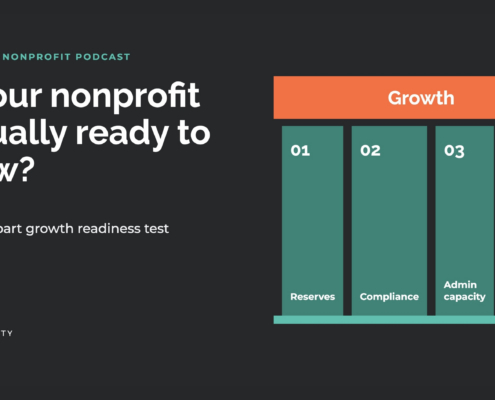
    Nonprofit growth readiness test graphic showing growth supported by four pillars: reserves, compliance, administrative capacity, and staff capacity, from The Charity CFO.

    Is Your Nonprofit Actually Ready to Grow? A Four-Part Readiness Test

    Structure Problem or People Problem? How Nonprofit Leaders Can Navigate the Messy Middle

    Nonprofit development staff member reviewing an AI-drafted donor email before sending

    Your Donors Can Tell: The Right and Wrong Ways to Use AI in Fundraising

    How to Leverage Data for Better Financial Decision Making

    How to Leverage Data for Better Financial Decision Making

    nonprofit leadership meeting

    The Nonprofit Burnout Crisis Isn’t a Wellness Problem. It’s a Structural One.

    AI Isn't Replacing Your Nonprofit CFO. It's Redefining the Job.

    AI Isn’t Replacing Your Nonprofit CFO. It’s Redefining the Job.

    Previous Previous Previous Next Next Next

    Featured Blogs

    • 501c3-donation-rules
      501(c)(3) Donation Rules: The Ultimate GuideJune 24, 2026 - 11:34 amby: Paul Cook
    • How To Fill Out W 9 For Nonprofit Organization
      How to Fill Out Form W-9 for a NonprofitMarch 13, 2026 - 2:51 pmby: Paul Cook
    • Should Your Nonprofit Hire A Full Time Or Fractional Cfo
      Should Your Nonprofit Hire a Full-Time or Fractional CFO?July 18, 2025 - 2:12 pmby: Abstrakt Marketing

    Sign Up for Our Newsletter

    Left Aligned Cfo Logo White
    Do Not Sell or Share My Personal Information

    Our Non-Profit Expertise

    Animal welfare

    Not-for-profit arts organization

    Faith-based organization

    Community youth development

    Advocacy group

    Philanthropy

    Human services

    Health care

    Workforce development

    Services

    Bookkeeping

    Accounting

    Grant Management

    Budgeting & Forecasting

    Audit Assistance

    System Migration & Tech Integration

    Tax Preparation

    Blogs

    501(c)(3) Donation Rules

    Nonprofit CFO Services Explained

    Who We Are

    About Us

    Our Team

    Testimonials

    Careers

    Terms and Conditions

    Cookie Policy

    Get in Touch

    Call Us: (314) 390-0220

    Email: [email protected]

    Website by Abstrakt Marketing Group ©
      • Sitemap
      • Privacy Policy
      Link to: Trust in Times of Change: How Nonprofit Leaders Can Navigate Disruption Without Losing Their People Link to: Trust in Times of Change: How Nonprofit Leaders Can Navigate Disruption Without Losing Their People Trust in Times of Change: How Nonprofit Leaders Can Navigate Disruption Without...trust-during-disruption-nonprofit-leaders Link to: Why the Disconnect Between Fundraising and Finance Is Costing Nonprofits More Than Money Link to: Why the Disconnect Between Fundraising and Finance Is Costing Nonprofits More Than Money Why the Disconnect Between Fundraising and Finance Is Costing Nonprofits More...
      Scroll to top Scroll to top Scroll to top
      Discover The Charity CFO Financial Blueprint: Tips from The Best Nonprofit Organizations
      Download Our Playbook