

For nonprofit leaders, Form W-9 is one of those documents that raises more questions than answers. Does a tax-exempt organization really need to complete one? Which tax classification applies? And what happens if the form is filled out incorrectly?
Because nonprofits don’t pay federal income tax, many assume W-9 rules don’t apply to them. But misunderstandings around this form can lead to payment delays, backup withholding, and compliance issues that distract from your mission. This guide breaks down how to fill out W-9 for nonprofit organizations in clear, practical terms so your team can complete it with confidence.
What Is IRS Form W-9?
Form W-9, officially titled Request for Taxpayer Identification Number and Certification, is used to collect accurate taxpayer information. Organizations request it so they can properly report payments to the IRS, typically using Form 1099-NEC or 1099-MISC.
For nonprofits, the key distinction is that completing a W-9 does not mean your organization owes taxes. Instead, it confirms your legal name, tax classification, and EIN so the requesting party can meet their own tax reporting obligations. Understanding this purpose is essential when learning how to fill out a W-9 for a nonprofit correctly.
Do Nonprofits Need to Fill Out a W-9?
Nonprofits often need to complete a W-9, even though they are tax-exempt. This is one of the most common points of confusion we see among nonprofit executives and finance teams.
A nonprofit may be asked for a W-9 form for nonprofit purposes when it is receiving payments, grants, or compensation for services. The organization requesting the W-9 is responsible for reporting payments to the IRS, and they need accurate information to do so.
Common situations include:
- Providing consulting, training, or professional services
- Receiving grant funds from a private foundation
- Acting as a fiscal sponsor or subcontractor
- Receiving rental income or royalties
- Being paid by a government agency or for-profit business
These scenarios fall squarely under typical W-9 requirements for nonprofit organizations, regardless of tax-exempt status.
Why Completing a W-9 Correctly Matters
Filling out a W-9 incorrectly may seem minor, but the consequences can be disruptive. A missing EIN, incorrect tax classification, or mismatched legal name can trigger payment delays or even backup withholding at a rate of 24%.
Beyond cash flow issues, errors can raise red flags during audits or financial reviews. For nonprofits already navigating complex nonprofit tax filing requirements, avoidable mistakes add unnecessary risk. Taking the time to understand how to fill out W9 for nonprofit organizations accurately protects both your finances and your reputation.
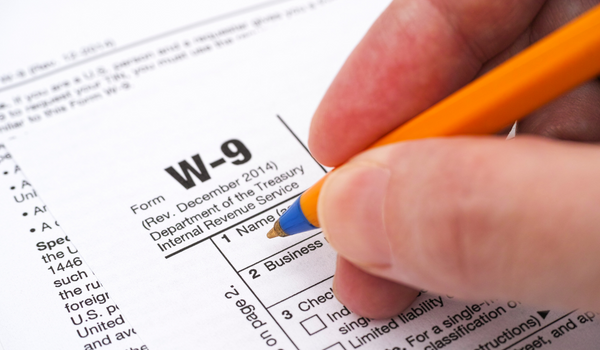
How to Fill Out W-9 for Nonprofit Organizations: Line-by-Line Guidance
The W-9 itself is short, but several sections cause confusion for nonprofits. Below is a step-by-step walkthrough designed specifically for tax-exempt organizations.
Line 1: Name (As Shown on Your Tax Return)
Enter the nonprofit’s legal name, exactly as it appears on your IRS determination letter and Form 990. This is not a shortened name, DBA, or fundraising brand.
Accuracy here matters because the IRS matches this name to your EIN. Even small variations can cause reporting issues later.
Line 2: Business Name / Disregarded Entity Name (If Applicable)
Most nonprofits leave this line blank. It is only used if your organization operates under a registered DBA or alternate legal name.
If your nonprofit does use a DBA for contracts or banking, include it here, but only if it is formally registered.
Line 3: Federal Tax Classification
This is the section that causes the most uncertainty when learning how to fill out a W-9 for a nonprofit.
For most nonprofits, the correct selection is:
- “Other” → write “501(c)(3)” or your specific exemption type (e.g., 501(c)(4))
This selection clarifies your W-9 tax classification and signals to the requesting organization that you are tax-exempt. Do not check “Corporation” unless your nonprofit has been explicitly instructed to do so by a tax professional.
Line 4: Exemptions
Many nonprofits can leave this line blank. While nonprofits are generally exempt from backup withholding, this line is not required in most cases and is frequently misunderstood.
If a payer specifically asks you to complete this field, consult with your accountant before doing so.
Lines 5 & 6: Address
Enter your organization’s official mailing address. This should match the address used for IRS filings and official correspondence whenever possible.
Consistency across documents supports smoother compliance and fewer follow-up requests.
Part I: Taxpayer Identification Number (TIN)
Most nonprofits will enter their Employer Identification Number (EIN) here—not a Social Security Number.
Double-check that the EIN matches IRS records exactly. This number is essential for proper reporting and is a critical component of how to fill out W9 for nonprofit organizations accurately.
Part II: Certification and Signature
An authorized representative must sign and date the form. This is typically an executive director, finance director, controller, or other officer with signing authority.
By signing, the organization certifies that:
- The EIN is correct
- The tax classification is accurate
- The organization is not subject to backup withholding
Common Mistakes Nonprofits Make on Form W-9
Even experienced nonprofit teams make W-9 errors, and it’s usually because guidance online is geared toward individuals or for-profit businesses.
Some of the most frequent issues include:
- Selecting the wrong tax classification
- Leaving the EIN blank or entering an SSN
- Using a shortened or informal organization name
- Assuming tax-exempt status eliminates the need for a W-9
- Submitting an outdated version of the form
These mistakes can delay payments, trigger follow-up requests, or complicate year-end reporting for both parties.
How W-9s Connect to Broader Nonprofit Tax Compliance
While the W-9 itself is simple, it sits within a larger compliance ecosystem. Accurate W-9s support clean 1099 reporting, consistent vendor records, and smoother audits.
If your nonprofit struggles with forms like the W-9, it may signal broader gaps in financial systems or documentation. Managing nonprofit tax filing requirements effectively requires clear processes, internal controls, and knowledgeable oversight.
If questions around W-9s, 1099s, or vendor reporting are coming up frequently, it may be time to step back and evaluate your overall tax compliance process. Learn how a nonprofit-focused accounting team can help ensure forms like the W-9 align with your broader tax preparation strategy.
When a Nonprofit Should Not Be Asked for a W-9
Not every interaction requires a W-9. Understanding when one is unnecessary helps reduce administrative friction.
For example, donations from individual supporters generally do not require a W-9 from the nonprofit. Similarly, some government grants may rely on alternative documentation rather than a standard W-9.
When in doubt, it’s best to confirm expectations upfront rather than assume. Clear communication with funders and vendors helps everyone stay compliant.
Best Practices for Managing W-9 Requests
To reduce errors and delays, nonprofits should treat W-9s as part of a standardized process rather than an ad-hoc task.
Strong practices include:
- Keeping a reviewed, ready-to-send W-9 on file
- Verifying EIN and legal name annually
- Limiting who is authorized to complete and sign forms
- Coordinating W-9 handling with year-end reporting workflows
These steps make it easier to respond confidently when learning how to fill out W9 for nonprofit organizations becomes a recurring need.
Why Nonprofit-Specific Guidance Matters
Much of the advice available online focuses on freelancers or small businesses. Nonprofits operate under different rules, expectations, and reporting structures.
Understanding W-9 requirements for nonprofit organizations requires context around tax exemption, grant funding, and compliance obligations. Working with advisors who specialize in nonprofit finance ensures your organization stays compliant without overcomplicating routine administrative tasks.
Take the Stress Out of Nonprofit Tax Compliance With TCCFO
Form W-9 may seem minor, but it plays an important role in your nonprofit’s financial and compliance framework. Knowing how to fill out a W-9 for a nonprofit accurately helps protect cash flow, avoid IRS issues, and maintain strong relationships with funders and vendors.
If your organization wants confidence that W-9s, 1099s, and other tax forms are handled correctly, it may be time to bring in nonprofit-specific expertise.
Reach out to The Charity CFO to get expert guidance on nonprofit tax preparation and compliance, so your team can focus on advancing your mission instead of worrying about IRS forms.