
The Silent Threat Lurking in Your Nonprofit
Think your nonprofit is safe from fraud? Think again.
Fraud happens in nonprofits far more often than leaders realize—and it’s not just the obvious scams. It’s the trusted employees padding expense reports, the volunteer quietly redirecting donations, the longtime bookkeeper creating fake vendors.
And here’s the real kicker: audits don’t catch most of it.
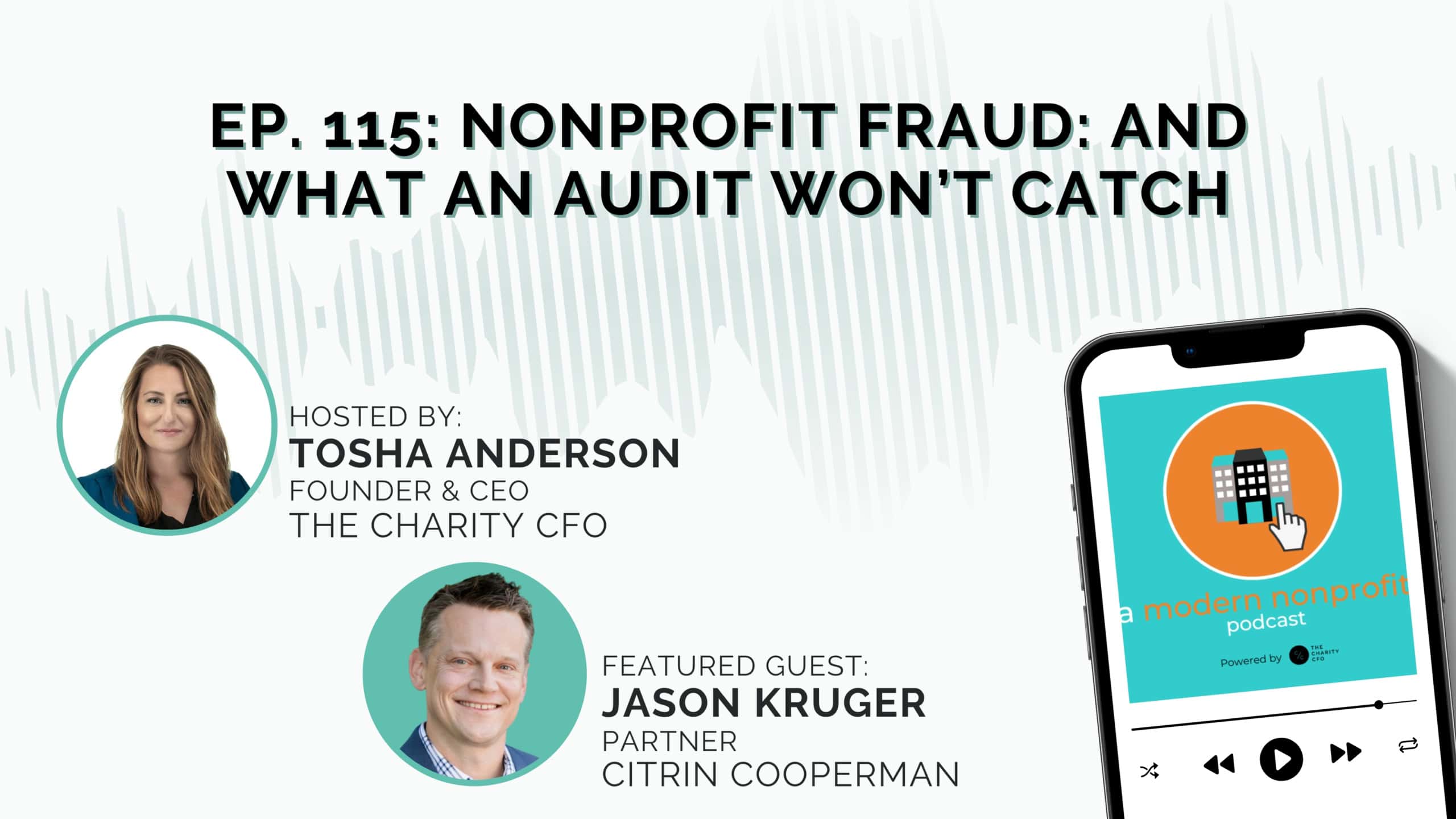
On a recent episode of The Modern Nonprofit Podcast, Tosha Anderson sat down with Jason Krueger, Partner at Citrin Cooperman, to expose the real risks of nonprofit fraud—and why audits won’t protect you. If you think an annual audit is enough to keep your organization safe, this conversation might change your mind.
Why Audits Won’t Save You
“The easiest way to steal? Being the only person in control of the money.” – Jason Krueger
Too many nonprofit leaders believe an annual audit guarantees financial security. It doesn’t.
Audits check whether your financial statements comply with accounting standards. They review transactions, but they don’t investigate them. If fraud is happening within the approved process, an audit won’t flag it. Fake employees and vendors?
Payroll padding? Credit card misuse? If they’re set up “correctly,” auditors won’t question them.
Most fraud isn’t about major, one-time thefts. It’s small, repeated transactions that fly under the radar. Someone submits personal expenses as reimbursements. A bookkeeper inflates payroll hours. A volunteer redirects donations before they’re recorded. These patterns don’t usually trigger an auditor’s attention.
If your fraud prevention strategy is just “we get audited,” you have a major blind spot.
How Fraud Really Happens in Nonprofits
Fraud in nonprofits isn’t always a dramatic embezzlement scandal. More often, it’s small, ongoing theft that adds up over time. And it usually happens for three reasons:
- Opportunity – Weak internal controls make it easy to steal.
- Pressure – Employees or volunteers face financial stress and rationalize fraud.
- Rationalization – They justify it: “I work hard. I deserve this.” or “I’ll pay it back later.”
It can be as simple as a staff member setting up a fake vendor and approving their own payments. Or an employee charging personal expenses on the company credit card and disguising them as business costs. Donation diversion is another common scheme—checks rerouted before hitting the books or online gifts funneled into private accounts.
When fraud goes unchecked, it doesn’t just drain resources—it erodes donor trust. And once trust is lost, it’s almost impossible to recover.
How to Actually Protect Your Nonprofit from Fraud
Fraud prevention starts with tightening internal controls. The key is segregating financial duties so no one person has unchecked access to the organization’s money. One person should never be in charge of approving, processing, and reconciling transactions. Separate those responsibilities and require oversight at every level.
Surprise financial reviews are another essential safeguard. Fraudsters adapt when they know the review schedule, so audits should be unannounced and random. Policies around expenses need to be airtight, too. Require receipts for all reimbursements, enforce spending limits, and mandate a second approval for anything over a certain threshold.
Technology also plays a big role. Manually handling cash and checks increases risk, while digital payment systems with built-in approval tracking provide an extra layer of security. And, most importantly, staff and board members need to be trained on fraud prevention. If they don’t know what to look for, they won’t recognize red flags when they appear.
The Bottom Line: Fraud Can Happen to Any Nonprofit
If your nonprofit doesn’t have strong internal controls, fraud is already a risk.
Audits won’t catch it. Blind trust won’t prevent it. The only real defense is a proactive fraud prevention strategy.
Who handles your money—and how much control do they have?
When was the last time you reviewed your expense policies?
Do you conduct surprise financial reviews?
If you’re not asking these questions, someone else might be—after it’s too late.
Want to hear real-world nonprofit fraud stories and expert prevention tactics? Listen to The Modern Nonprofit Podcast with Tosha Anderson and Jason Krueger.
Now, what steps is your nonprofit taking to fraud-proof its finances? Let’s talk strategy.
Get in Touch with Jason Kruger: https://www.linkedin.com/in/jason-kruger-a0b159b/
And Jason’s website here: https://www.citrincooperman.com/
Follow Us Online
Stay connected and get more exclusive content on:
Website: https://www.thecharitycfo.com
Instagram: @thecharitycfo
Facebook: https://www.facebook.com/thecharitycfo
LinkedIn: https://www.linkedin.com/company/the-charity-cfo-llc/posts/?feedView=all
TikTok: @thecharitycfo
Spotify: https://open.spotify.com/show/6hofQXPCxiPZuZy3OecW8y
Apple Music: https://podcasts.apple.com/us/podcast/a-modern-nonprofit-podcast/id1542301310
Get Involved
Subscribe for more videos: Don’t forget to hit the bell icon so you never miss a video!
Explore A Modern Nonprofit Podcast: https://open.spotify.com/show/6hofQXPCxiPZuZy3OecW8y
Join our Newsletter & never miss out: https://go.thecharitycfo.com/l/995872/2025-02-24/6ldn1
About The Charity CFO
We are an accounting partner that truly understands nonprofits. We know the missions that drive you, the obstacles that challenge you, and the dedication your job demands. We “get” nonprofits, because nonprofits are all that we do. If you need help with your accounting and bookkeeping, let’s talk. Book a FREE consultation here.