

If you’re a first-time (or first-week) nonprofit CEO, you didn’t just inherit a mission, you inherited risk. Budgets, audits, the 990, funder site reviews, compliance deadlines, and a finance function that may or may not be humming along. The leaders who succeed know what to ask and when to ask it.
Week One: Get the Truth on Paper
Start with documents, not opinions. Request the current-year budget, recent monthly financials, the last two audits, the most recent Form 990, and any funder site visit reports. Then interrogate how the budget was built. Were program and development leaders involved or did it happen in a silo? Were assumptions anchored to signed grants and contracts, or did we simply inflate last year’s spreadsheet by 3%? Look for program and department-level budgets, reasonable allocations, and a format that’ll translate into actual management.
Read Past the Numbers
Audits and 990s are more than totals. The footnotes are where liquidity problems, going-concern risks, and management’s “plan” show up. If your organization crosses the federal funding threshold, review the Single Audit section for control issues and compliance findings. And check the audit date. If it’s dragging into late fall or beyond, ask why. Late audits often point to books that weren’t ready.
Red Flags You Can Spot Fast
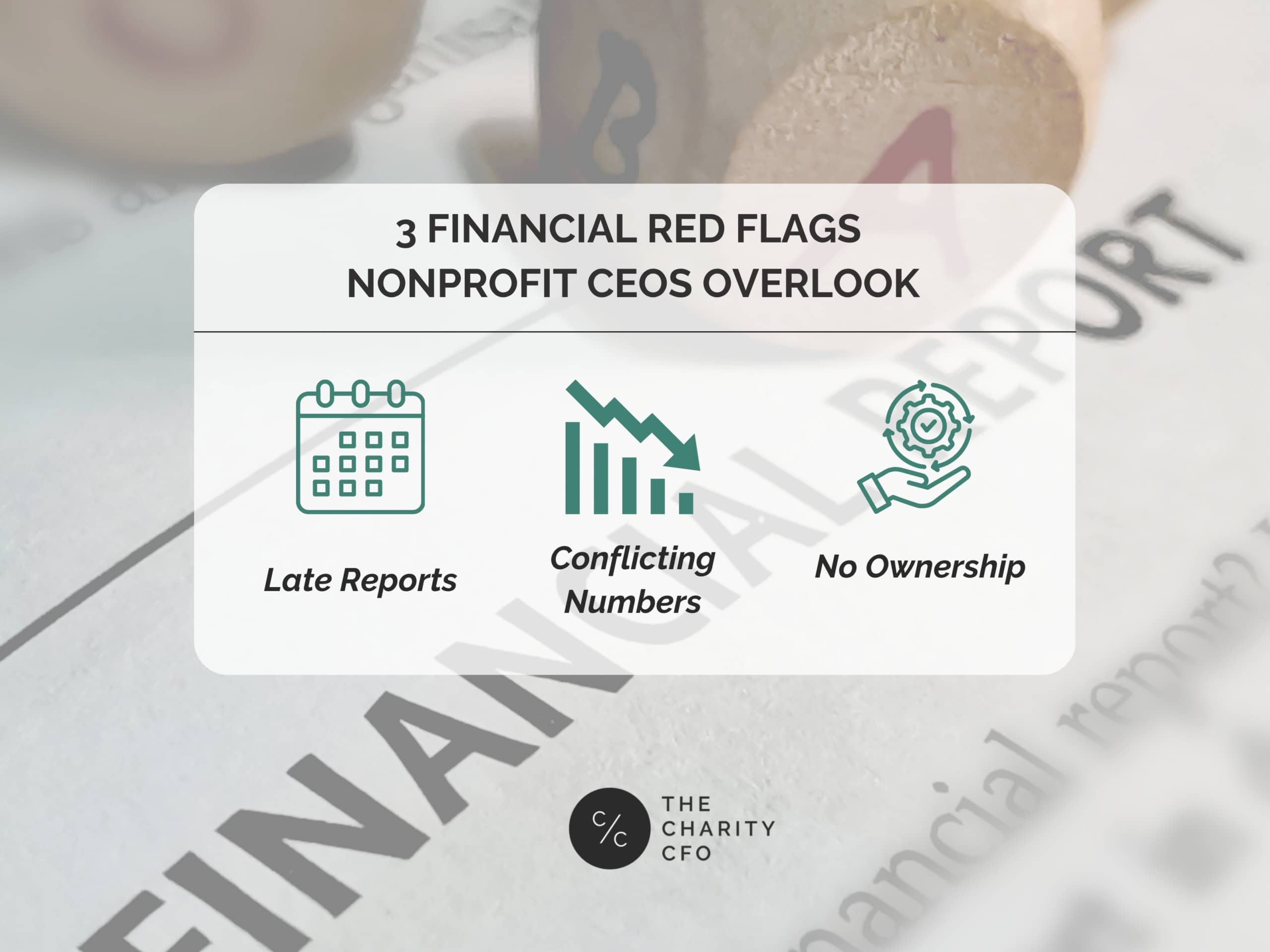
Late monthly reports. Conflicting figures between development and finance. No follow-up on prior audit findings. Vague answers with no timelines. Compliance that belongs to “everyone” (which means no one). None of these are small. They’re signals that systems, staffing, or accountability need restructuring.
Your First 90 Days: Create Clarity
Move from documents to diagnosis. Review budget-to-actuals and chase material variances. Verify restricted fund balances and the system that tracks them. Meet your auditors and ask for candid feedback. Then map the finance function with a simple responsibility matrix: who does what, how often, and how reporting flows to the right leaders each month. Give department heads the views they actually need—development-specific and program-specific reports—on a predictable cadence.
Own the Financial Story
When the cadence is consistent and the data reconciles across teams, you can tell a credible story to your board and funders. Sometimes that story is hard, but informed beats surprised—every time. If you want structure for setting goals and building capacity, download The Charity CFO Financial Blueprint. It’s the baseline we use to help nonprofits move from reactive to reliable.
Follow Us Online
🌐 Website: www.thecharitycfo.com
📸 Instagram: @thecharitycfo
📘 Facebook: /thecharitycfo
💼 LinkedIn: / the-charity-cfo
🎵 TikTok: @thecharitycfo
Join our newsletter: https://go.thecharitycfo.com/l/995872/2025-02-24/6ldn1
Need more than a CFO? Our bookkeeping services offer additional support, so you get full-spectrum financial leadership, all in one place.